Enterprise UI and AI ideation at a Big 4 firm.
Design system. AI features. Ten products in production.
Existing tools that need to grow, not just look better.
Internal enterprise software at a large professional services firm doesn't get replaced. It evolves.
The challenge isn't building from scratch. It's understanding what's already in use, where the UI creates friction, and which AI capabilities could fit inside existing workflows without breaking what already works.
Some projects needed clean UI updates. Others needed someone to think through what these products might look like in two years.
Stakeholder-led. PM-first.
Direct user access on this engagement is limited. Requirements come through product managers who work closely with the business.
My process is about translating those requirements accurately. I focus on understanding what the PM needs, asking the right questions, and pushing back when something won't work as UI.
For AI features, I designed concepts like an in-product assistant that answers plain-language questions about live data and returns structured tables with a recommendation. I designed it in light and dark from the same components, so it drops into existing products without a reskin.
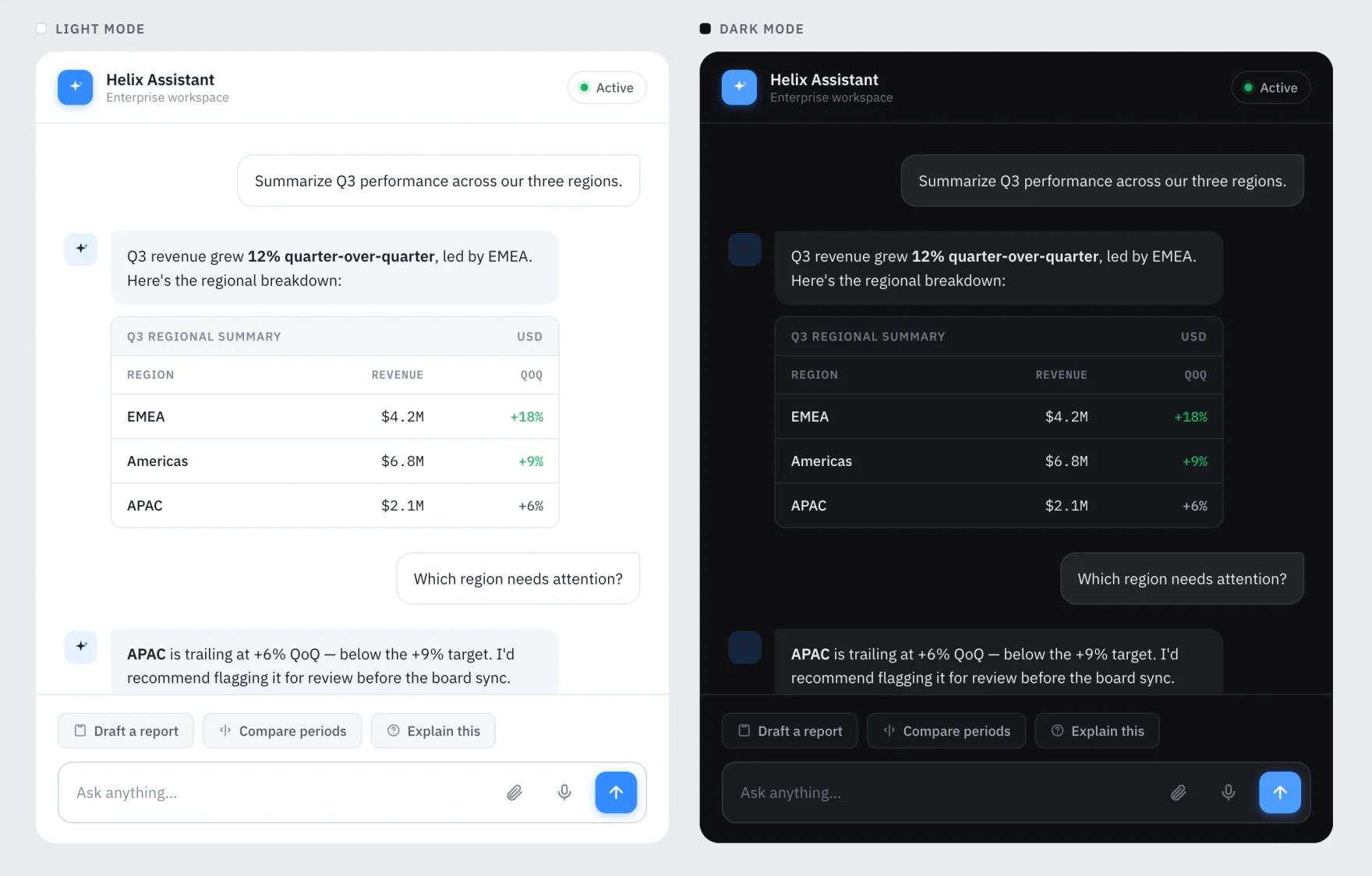
Design system, dark mode, AI features.
I was identified early as the team's data visualization specialist. A significant part of my work has been contributing to the firm's shared design system, specifically converting light-mode components to dark mode.
That means maintaining consistency while making decisions that hold up across different screen contexts.
Alongside that, I've designed AI features. I think through how to embed intelligent capabilities into tools that already have users and established habits. This isn't concept work for a pitch. It has to fit into products that are running.
I also worked on UI improvements across multiple development teams.

Dark mode components shipped. AI features in development.
Components I designed are part of the live design system. AI feature designs have moved into active development discussions. The engagement is ongoing.
What I'd do differently.
I'd push harder for direct user access earlier. Working through PM requirements is efficient, but there were moments where one conversation with an actual user would have resolved a debate that took three meetings instead.